Applied Behavior Analysis (ABA) has come a long way since its early days. This science-based approach helps people change behaviors in meaningful ways. Today, it's known for supporting individuals with autism and others seeking behavior modification. Let's dive into the history of Applied Behavior Analysis and see how it evolved into a powerful tool for positive change.
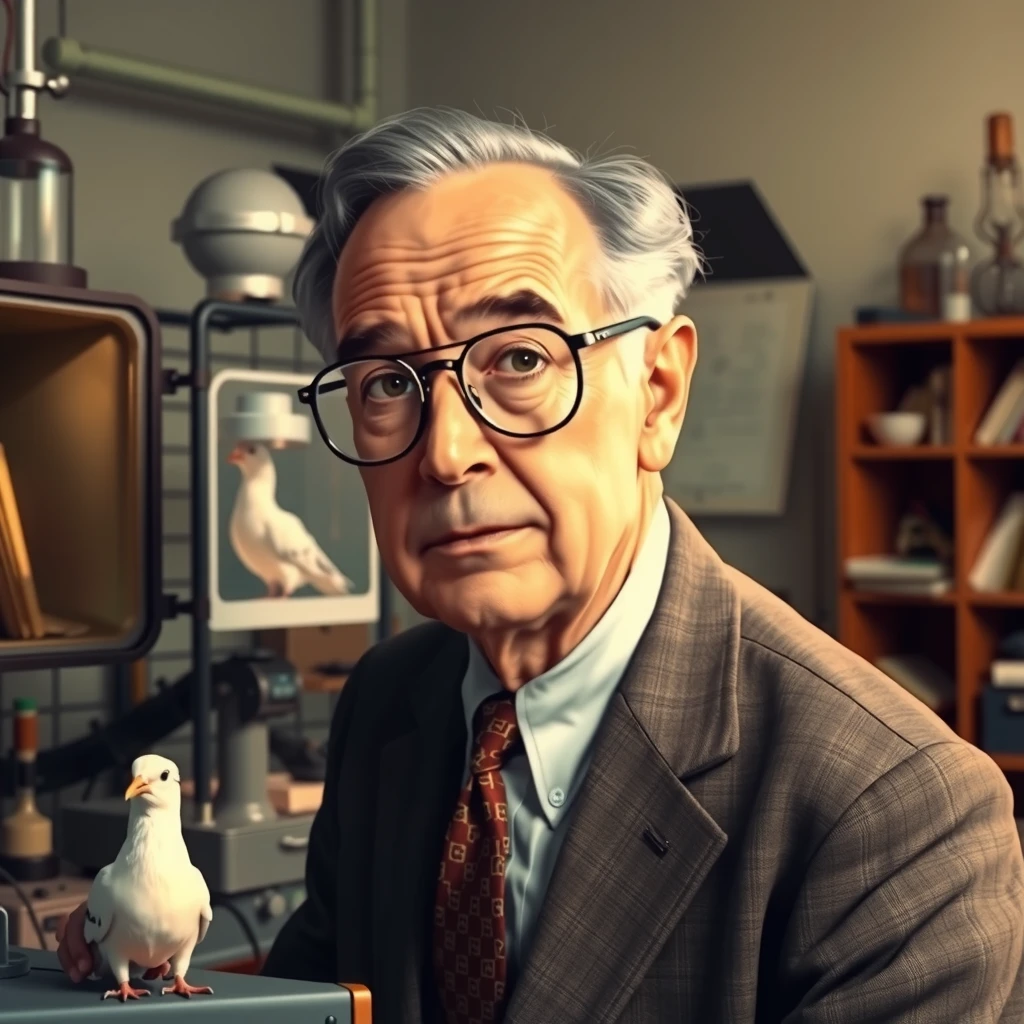
The Roots in Behaviorism
The story starts in the early 20th century with behaviorism. Psychologists like Ivan Pavlov showed how dogs could learn to salivate at the sound of a bell through classical conditioning. Then came Edward Thorndike, who studied how animals learn from consequences – what he called the 'law of effect.'
But the real foundation for Applied Behavior Analysis came from B.F. Skinner in the 1930s and 1940s. Skinner developed operant conditioning. He proved that behaviors increase when followed by rewards and decrease when ignored or punished. Skinner built 'Skinner boxes' to test this with animals like pigeons and rats. His work showed behavior is shaped by the environment, not just inner thoughts.
Skinner's ideas were groundbreaking. He believed we could understand and change behavior by looking at what happens before and after it. This shifted focus from vague theories to measurable actions. Many see Skinner as the father of modern behavioral science.
Birth of Applied Behavior Analysis
In the 1950s and 1960s, researchers took Skinner's lab findings and applied them to real life. They wanted to solve everyday problems, like helping people with developmental disabilities.
Key pioneers included Teodoro Ayllon and Jack Michael. In 1959, they used reinforcement to improve behaviors in psychiatric patients. Around the same time, Sidney Bijou applied these principles to children.
A landmark moment came in 1968. Donald Baer, Montrose Wolf, and Todd Risley published a paper defining seven characteristics of ABA. They stressed it must be applied, behavioral, analytic, technological, conceptually systematic, effective, and show generality. That same year, the Journal of Applied Behavior Analysis (JABA) launched, giving the field a home for research.
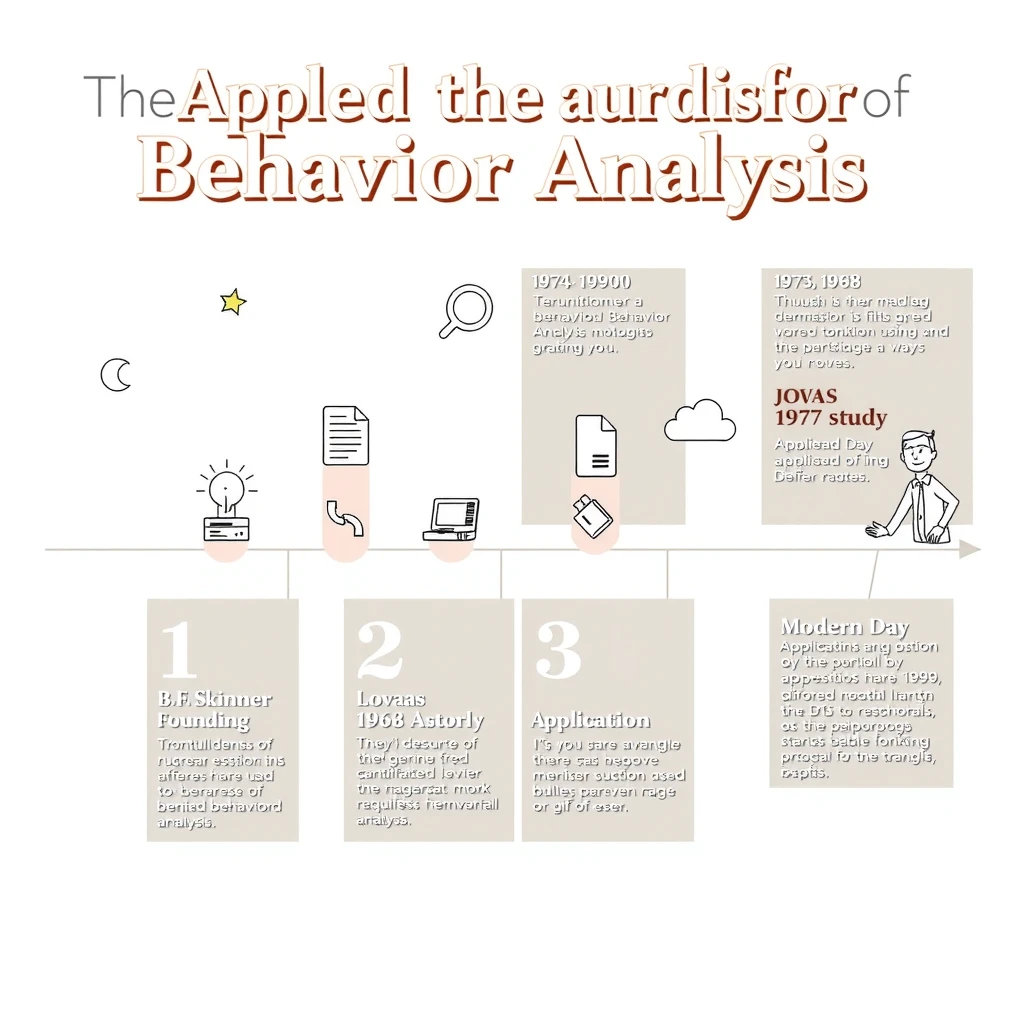
Key Milestones in the History of ABA
Here's a quick list of important steps:
- 1938: Skinner publishes The Behavior of Organisms, introducing operant conditioning.
- 1959: Early applied studies, like reducing tantrums through extinction.
- 1968: Baer, Wolf, and Risley define ABA; JABA starts.
- 1970s: Expansion to education, workplaces, and more.
- 1987: Ivar Lovaas publishes study showing intensive ABA helps many children with autism achieve typical functioning.
- 1998: Behavior Analyst Certification Board (BACB) forms to set professional standards.
- 2000s: Insurance coverage grows; ABA becomes widely recognized for autism support.
ABA and Autism: A Game-Changer
One of the biggest impacts of Applied Behavior Analysis has been in autism treatment. In the 1960s, Ole Ivar Lovaas at UCLA started using ABA intensively with young children. His approach, now called Early Intensive Behavioral Intervention, broke skills into small steps and used rewards to teach them.
Lovaas's 1987 study was huge. It showed that nearly half the children who got 40 hours a week of ABA made big gains in IQ, language, and school placement. This put ABA on the map as an evidence-based therapy.
Today, ABA is the go-to behavioral therapy for many families. Therapists use play, natural settings, and positive reinforcement to teach communication, social skills, and daily living. The science of behavior: how ABA is transforming lives – that's clear when you see a child learn to speak or play with friends for the first time.

I've seen this firsthand in stories from parents and professionals. One mom shared how ABA helped her son request toys instead of crying. Simple changes like that build independence and reduce frustration.
Evolution and Modern ABA
Early ABA sometimes used punishment, which raised concerns. Over time, the field shifted to positive methods. Now, emphasis is on assent, fun learning, and individual needs.
Applied Behavior Analysis for behavior modification isn't just for autism. It helps with anxiety, ADHD, workplace performance, and even sports training. Organizations use it to boost safety and productivity.
Research backs ABA strongly. Organizations like Autism Speaks and the BACB highlight its effectiveness. But experts agree: good ABA is flexible, respectful, and focused on quality of life.
As we look ahead, ABA continues to grow. New tech like apps and virtual reality add tools. The core remains: understanding behavior to make positive changes.
The history of Applied Behavior Analysis shows a science dedicated to helping people thrive. From Skinner's labs to today's playrooms, it's about unlocking potential one step at a time.
In summary, ABA started as lab experiments and became a life-changing therapy. It proves that with the right support, behaviors can shift in ways that open doors to fuller lives.

Discuss Here