Overview
Applied Behavior Analysis (ABA) gives parents powerful tools for behavior management. This guide shares practical strategies you can use at home to encourage positive behaviors, reduce challenges, and build stronger connections with your child. (38 words)
What Is Applied Behavior Analysis?
Applied Behavior Analysis, or ABA, is a science-based approach to understanding and changing behavior. Experts widely use it as a behavioral therapy for children with autism, but any parent can apply its principles for behavior modification.
At its core, ABA looks at how the environment affects behavior. It focuses on what happens before a behavior (antecedent) and after it (consequence). By adjusting these, you can help your child learn new skills and reduce unwanted actions.
Many parents worry that ABA sounds too clinical. In reality, when done with love and flexibility, it becomes a natural part of family life. It complements family therapy by giving you concrete tools to use between sessions.

Key Principles of ABA for Parents
Here are the foundational ideas behind ABA for parents: practical strategies for behavior management.
- Positive Reinforcement: Reward good behaviors to make them happen more often.
- Consistency: Apply rules and consequences the same way every time.
- Breaking Skills Down: Teach complex tasks in small, manageable steps.
- Data Tracking: Note what works and what doesn't to adjust your approach.
These principles form the base of Applied Behavior Analysis for behavior modification.
Practical Strategy 1: Use Positive Reinforcement Effectively
Positive reinforcement is the heart of ABA. When your child does something you want to see more of, immediately follow it with something they enjoy.
For example, if your child puts away toys without being asked, say, "Great job cleaning up! Let's read your favorite book together."
Real-life insight: In my experience helping families, parents often underestimate the power of specific praise. Instead of "Good boy," try "I love how you shared your toy with your sister—that was kind!" This tells the child exactly what to repeat.
Common Reinforcement Ideas
| Type | Examples |
|---|---|
| Verbal | Specific praise, cheers |
| Tangible | Stickers, small treats |
| Activity | Extra playtime, screen time |
| Social | Hugs, high-fives |
Choose rewards that motivate your child. What works one week might change the next, so stay flexible.
Practical Strategy 2: Create Visual Supports
Many children respond well to visual cues. Visual schedules help predict what comes next, reducing anxiety and challenging behaviors.
You can make a simple daily routine chart with pictures: wake up, breakfast, school, play, dinner, bath, bedtime.
Hang it at eye level and review it each morning. As tasks complete, let your child check them off or move pictures to a "done" column.
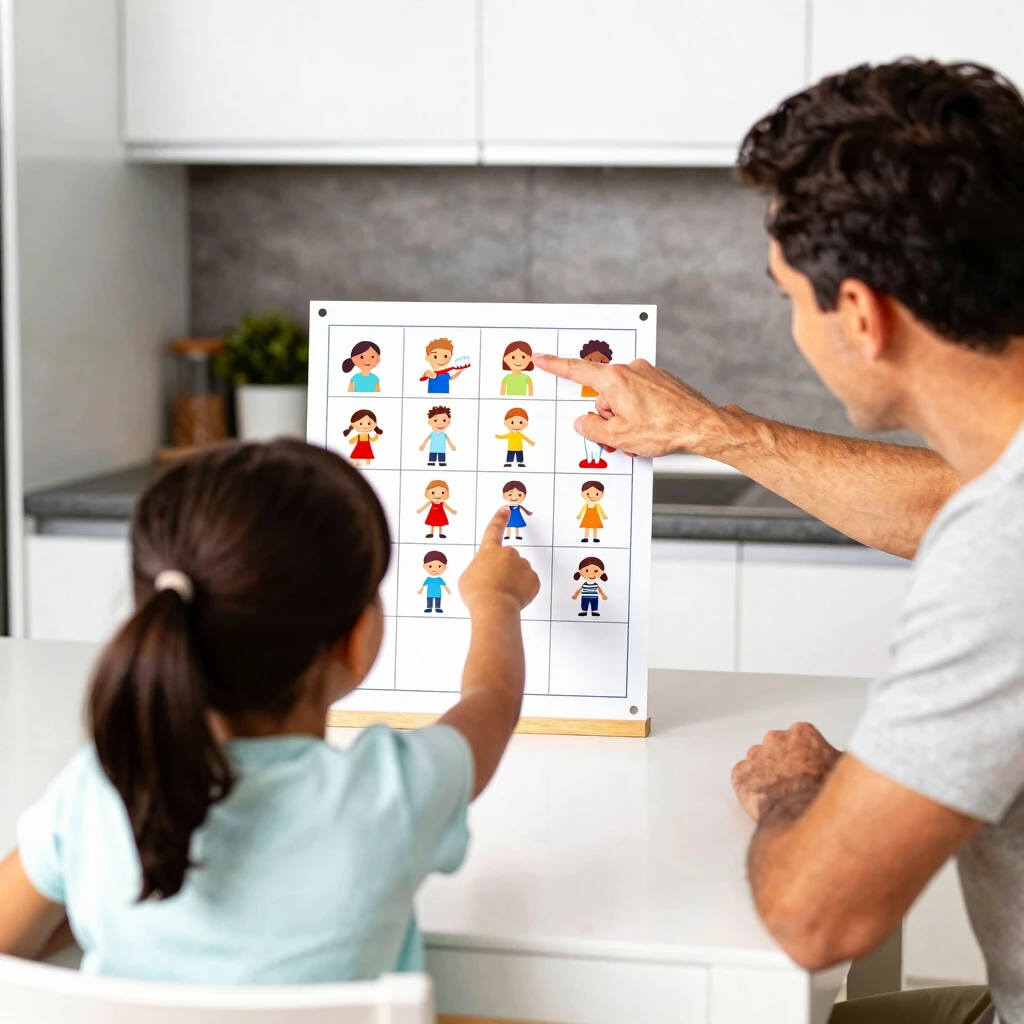
This tool works wonders for transitions, a common trigger for meltdowns. One parent I know cut morning battles in half just by adding a visual timer and schedule.
Practical Strategy 3: Teach Replacement Behaviors
Instead of just saying "no," teach what to do instead.
If your child hits when frustrated, teach them to use words ("I need help") or take deep breaths.
Steps to teach a replacement: 1. Model the new behavior yourself. 2. Practice during calm moments. 3. Prompt gently when needed. 4. Reinforce heavily when they use it.
Practical Strategy 4: Handle Challenging Behaviors Calmly
Challenging moments test every parent. ABA teaches us to stay neutral and focus on teaching.
During a tantrum: - Ensure safety first. - Reduce demands temporarily. - Wait for calm, then reinforce any small step toward recovery. - Later, discuss and practice better ways.

Personal note: The first time I saw a parent use planned ignoring for attention-seeking behavior while reinforcing calm requests, the change was dramatic within days. Consistency is key.
Practical Strategy 5: Pairing and Building Trust
Before teaching new skills, build a positive relationship. This "pairing" process makes you a source of good things.
Spend time following your child's lead in play without demands. Offer choices and fun activities. This foundation makes later interventions more effective.
When to Seek Professional Help
While these home strategies help many families, some children need more support. Work with a Board Certified Behavior Analyst (BCBA) for personalized plans. ABA combines well with family therapy to address everyone's needs.
Authoritative resources: - Autism Speaks - What is ABA? - CDC - Treatment and Intervention for Autism
Final Thoughts
ABA for parents: practical strategies for behavior management offers hope and real tools. Start small—pick one strategy, apply it consistently, and track progress. Celebrate small wins along the way.
With patience and these Applied Behavior Analysis techniques, you can help your child thrive while strengthening your family bond.

Discuss Here